Teamwork

Seattle Pacific University standards for the school of Education consists of 8 categories to demonstrate the growth of future educators. Standard 8.1 is participating in a professional community, where the relationships with colleagues are characterized by mutual support and cooperation. The school building contains pockets of classroom for each grade level, in addition to support services located throughout the building. These pockets in the school house a community of professionals to help ensure the educational success of every child through collaboration and cooperation [1].

The capstone of my education required articulation of my philosophical beliefs towards special education and lessons learned along the way in a reflective essay [2]. My belief that every child deserves a high quality education. A child’s education should not depend on their socio-economic status, race, sex, or disability. Every child deserves a fighting chance to reach their full potential and be valued citizens. Yet, strengthening my philosophic beliefs towards education have been through the understanding the role of the para-educators, the partnership with the IEP team and the delicate balance of adhering to the laws.   My strength as a special education teacher is dependent on the collaboration of paraprofessionals, and the IEP team [3].

Special education philosophy

Through my internship, I learned collaboration is valuing each individual’s contribution to enhancing the student’s academic environment by remembering the common goal, of helping a child. Within the team, sharing the responsibility of decision making and the outcome, negative or positive. The other piece is seeking their participation, instead of demanding their attendance [4]. The impact of working with professionals in a collaborative environment with mutual support and cooperation enhances the education of each child. The child will be able to have a meaningful, rich academic experience that fosters learning and growth from the professional community that works together [5].

The next step to increase effectiveness in this area is to take an active role the in the leadership team within the school and professional learning communities. In addition, to take a class at the ESD department to help build these qualities [6].

Posted in h5 | Tagged , | Leave a comment

Teaching the Whole child

Seattle Pacific University standards for the school of Education consists of 8 categories to demonstrate the growth of future educators. Standard 1.1 is demonstrating content and knowledge and within that category the teacher recognizes the value of understanding students’ interests and cultural heritage and displays this knowledge for groups of students. The current classroom is a melding pot representing different ethnic identities. An educator has to understand and value the cultural heritage within the classroom to set high expectations for student engagement and learning [1].

I had the opportunity to participate in Twin City Elementary school, everyone has Culture Festival. Each grade performed a music or dance number representing a different culture, while the school, friends and family watched. I was able to sit with a handful of the school’s English language learners. Their expression and enthusiasm for when their culture performed was priceless. One of the students turned towards me beaming and shared, “that’s what we do in my family!” Observing the students, I personally connected the importance of understanding and valuing the cultural heritage of students. Based from my graduate classes, I could give numerous studies demonstrating the importance of teaching with the understanding of cultural heritage, yet I lacked the emotional connection to the subject [2]. Participating in the culture festivities, allowed me to connect my academic knowledge to the heart of the students. I was able to witness the importance of a student’s culture heritage within a school setting [3]. Through my involvement, I have a deeper understanding of the importance for our students to have their culture recognized and valued. Based from the experience, I have drafted my professional growth plan that includes the action plan of celebrating a culture a month within my classroom for the 2016/2017 school year and have submitted it to OSPI. [4].

growth plan

Professional Growth Plan


A student’s identity is based from their culture and without the knowledge of their culture, we would be only teaching the outer shell of a child. Students participating with high engagement, meeting the high expectations requires we teach the whole child, not just the outer shell [5]. Celebrating a culture monthly in my classroom is one step to recognizing and valuing each student’s heritage, yet to increase my effectiveness I will seek the professional advice from the school’s ELL teacher for further ideas to enhance my lessons to meet the needs of each learner. My hope is to build a cooperative relationship with the ELL teacher to make a positive impact within my class and within the school building [5].

Posted in H1, p1 | Tagged | Leave a comment

Keeping the Pace

Seattle Pacific University standards for the school of Education consists of 8 categories to demonstrate the growth of future educators. Standard 1.3, is engaging students in learning, which the lesson has clearly defined structure around which the activities are organized. Pacing of the lesson is generally appropriate. A proficient educator has comprehensive knowledge of the student’s current academic growth to ensure the lessons are structured around their Zone of Proximity to fully maximize instructional learning. The activities within the lesson should be structured and organized to help facilitate growth of the student to reach mastery of the skill set. In addition, the pacing of the lesson needs to constant to keep the students actively engaged to support their academic growth [1].

Through my field observations made by my SPU supervisor, it has been noted my growth opportunity is the pacing of my lessons. I struggle with keeping the pace constant with the diverse learners in special education. My pacing is easily diverted by student’s questions that don’t pertain to the lesson. For example, a learner asking mid-lesson if she could take off her shoes and socks because she is hot. Recognizing that my pacing is effecting student achievement, I sought veteran educators to elicit advice. Their advice was to observe a teacher with distinguished pacing and structure. I was given the opportunity to observe a 2nd grade teacher. In addition, the school principal agreed to observe a lesson and provide strategies to increase my level of student engagement through pacing [2].

I recognized my growth opportunity is the pacing of my lessons. I have demonstrated emerging competence in the standard by recognizing this is an area of growth and creating a plan to help facilitate desired skills to improve the pacing of my lessons. I have sought advice from experienced educators, been able to observe a distinguished teacher and reached out to the building principal [3]. Observing the 2nd grade general education classroom, I was able to notice the teacher’s tools to help keep her pacing of the lesson. I could immediately notice that the teacher had taught the student’s the routine and expectations clearly. The transitions in the class were smooth and didn’t interrupt the instructional teaching. The teacher used a chiming sound to indicate transitions and re-direction. The teacher utilized a timer to ensure a constant pace through the entire lesson. I could tell she had a clear structure of activities and the amount of time for each one [4]. The constant pace allowed for active student engagement, while being able to cover a lot of instructional material without disruptive behaviors [5].

2nd grade observation

I look forward to receiving feedback from the building principal pertaining to my lesson, but I learned a lot of strategies from observing the 2nd grade class. Until I have a solid understanding of the curriculum, I need to figure the time for each activity and write it on the lesson plan. Having a pre-set time schedule will help facilitate a constant pace. In addition, I need to utilize the timer to hold myself accountable for the timing of the lesson. I need to have a constant routine for transitions, so each student knows the expectations. Lastly, state the expectations in the beginning of the lesson and hold students accountable to meet the expectation to maximize student achievement [6].

Posted in H1 | Tagged | Leave a comment

Reflecting on my Technology lesson

Artifact: Original lesson plan

Modified lesson plan

I was not able to fully teach my lesson, but I have been able to embed small technology pieces into my current lessons. I used Coogle it to help sorts the students thoughts about a piece of literate. I created google slides to help with background knowledge through images, and video clips. Looking back through this lesson, I have incorporated a lot of technology components. Reflecting, in order for the lesson to be successful, the students have to slowly be introduced to online experiences. Expecting a student in the special education department to embrace a change in teaching strategies is challenging. My lesson could be a goal for the end of the year, after the students have been introduced and become familiar with each different computer component. There are some students that continue to need instruction and help logging  into the school computer, after months of explicit instruction. Talking to my students, the majority don’t have computer access at home.  My excitement to embed technology into my lessons shadowed the reality of the diverse needs of my learners. Technology can still be used, but there to be a slow introduction to explicitly teach each technology component with repetition.

My success criteria for the lesson has changed. In the beginning, I desired for each student to create a storyboard to identify the main characters. I would change my success criteria for the students to be able to identify the main characters through paper and pencil, in addition to using at least one technology feature in the lesson. I would want them to be able to use Tumblebooks independently or google slides to create the storyboard. Having the students identify the main character with pencil and paper allows for easier data collection to help support the IEP goals. I have not figured out how to use different technology pieces and document their growth through daily data collection electronically.

The attached link will take you to the Coogle I used in activating prior knowledge of Peter Pan with my students. I had the students input their ideas onto the form, which was a successful feature of the lesson.

Posted in ISTE 5 | Tagged , | Leave a comment

Differentiation

Seattle Pacific University standards for the school of Education consists of 8 categories to demonstrate the growth of future educators. Standard 3 is differentiation, in which the teacher acquires and uses specific knowledge about students’ cultural, individual intellectual and social development and uses that knowledge to adjust their practice by employing strategies that advance student learning [1].

The average elementary class contains 25 students. Each student brings their own unique story into the classroom. The stories encompass their cultural identity, family background and individuality. Interwoven into the stories is their exceptionality of their intellectual and social development. The outside of the classroom might identify the room as 3rd graders, but inside that simple number cannot describe the students. The teacher inside the room has to meet each student at their individual needs to help them reach their full potential [2].

In my internship, I am working in the resource room working with a 5th grade math class. To increase my knowledge of the curriculum and differentiation teaching strategies, I observed a general education 5th grade math class. During my observation, I noticed the different level of questioning the teacher employed for the different learners. I watched his strategy to help the students struggling with the concepts through the use of dry erase boards. The teacher continued to emphasis through the lesson that each brain processes different, which is why there are more than one strategy to solve a problem. The teacher had different strategies highlighted on the overhead screen. I was able to take my notes from the general education class and provide differentiation teaching to my students in the resource room. Through my observation, I was able to modify the general education math lesson to meet the needs of the students in the resource room. Modifying the lesson allowed for my students to feel included in their general education curriculum without the loss of specific designed instruction [3].

Notes from my field observation

Through the experience, I feel a deeper understanding and specific knowledge of differentiation instruction between general and special education classrooms. I have learned to differentiate instruction through the use of specific questions related to their strength and areas of growth. The flexibility to modify lessons according to the learner’s needs [4]. For example, the pacing of math lesson in the resource room is a lot slower than the general ed. class. I took an extra day to explain arrays and used a multi-sensory approach to ensure the students understood the concepts [5]. The implications of differential instruction were accessing the student’s confidence in the subject before we started the lesson segment and watching their confidence grow. They rated their confidence as a 0 in the beginning and a 4/5 at the end of the lesson. It was exciting for me to watch their confidence grow, in addition they felt like they could contribute to their general ed. class. Reflecting on my lesson segment and observation. Next time, I would want to incorporate some of the class questions from their home room into the lesson in the resource room to help bridge the classrooms [6].


Posted in H3 | Tagged , | Leave a comment

We the people…

To understand the ISTE standard 5, digital citizenship should be define. Digital citizenship incorporates different avenues within technology. The first piece of digital citizenship is for an individual to have full and equal electronic participation in society. With full digital access, individuals are able to participate in the new digital economy through buying and selling of goods online. Citizenship encompasses electronic communication through e-mail, cellular phone and social media. Individuals need to be taught digital literacy. Part of full digital participation is to be educated on the applications of technology used in the work place, school and home. There is certain digital etiquette. Individuals needs to adhere to electronic standards of conduct or procedures. Within etiquette is maintaining an electronic responsibility for their actions and deeds through digital law. Individuals need to understand their rights and responsibilities in the digital world. The last two pieces of digital citizenships are physical, psychological well-being online, including electronic safety, (Ribble, 2016).

My triggering question is to seek resources and support on the best practice to teach digital citizenship to students. Microsoft published some statistics highlighting the need for intentional teaching practices to help students navigate digital citizenship:

1.5 million teens say they have sent sexually suggestive videos or images of themselves with a mobile device, while 6 million teens say they have received suggestive images from someone they know.

86 percent of teens believe it is acceptable to illegally download and share music.

49 percent of teens say they have received or viewed hateful, sexist or racist messages online.

Based on some these statistics alone, there are missed opportunities to teaching digital citizenship within schools. Education world gives links to organizations that have developed free curriculum, such as common sense media and google. In addition, they have fun engaging pre-built lesson plan activities to help teach students about the importance of a positive footprint in cyber world. Along with other lesson plans to help promote positive digital citizenship that can be used in a special education and ELL setting. The educational system needs to help students navigate their role in digital citizenship. Teachers need to have the content knowledge and experience with technology to be the role model for their students.


References

Education World (2013). Teaching digital citizenship. Retrieved from: http://www.educationworld.com/a_tech/tips-teaching-digital-citizenship.shtml

Ribble, M., (2016). Nine elements of digital citizenship. Retrieved from: http://digitalcitizenship.net/Nine_Elements.html


Posted in ISTE 5 | Tagged , | Leave a comment

Role of educator and technology

ISTE 4: Critical thinking, problem solving and decision making.

Education continues to evolve to meet the needs of the learner. No longer do individuals seek to hear a Socratics seminar in the courtyard to be educated. They accessibility of information is a click away on the world wide web, yet the amount of information on the web can be daunting and overwhelming.   The standard of ISTE 4 wants to guide students through the mass of information to develop critical thinking, problem solving and decision making skills. We want education to be applicable to a student’s world to help them reach their full-potential.

Developing critical thinking skills, a student might question the role of an educator. In the future can an educator be replaced with on-line learning?

“However, many students are not, at least initially, independent learners (see Candy, 1991). Many students come to a learning task without the necessary skills or confidence to study independently from scratch (Moore and Thompson, 1990). They need structured support, structured and selected content, and recognized accreditation. The advent of new tools that give students more control over their learning will not necessarily change their need for a structured educational experience. However, learners can be taught the skills needed to become independent learners (Moore, 1973; Marshall and Rowland, 1993). Social media can make the learning of how to learn much more effective but still only in most cases within an initially structured environment” (Bates, n.d).

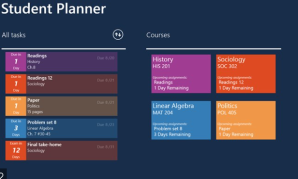
There are various mediums in technology that are used in pedagogical approaches, such as text, audio, video, computing and social media to enhance the learning experience, especially in a special education environment. An application, like OneNote can help students with specific learning disabilities develop critical thinking, problem solving and decision making skills, in conjunction with a structured learning environment with direct instruction. “One of the unsung heroes of helping students with special needs is OneNote, which allows you to use so many different types of media, it readily provides ways for students to take notes, collate information, and store information, in audio, video, image and conventional note format. For example, for students with dyslexia, OneNote has many features that can help students take notes faster and in different ways, stay organized, and meet literacy challenges, such as spelling and grammar,” (Microsoft). One of the advantages of using One note is the ability

onenote

take pictures and placing them in a One note folder, along with student planner, notifications and ability to share documents.

Reflecting, technology should not replace the teaching of these desired skills. Success with an app like OneNote requires face to face teaching of these skills first. Once the skills are learned, the app will help with generalization and mastery.

References:

Bates, A.W. (n.d.). Fundamental change in education. In Teaching in a digital age (1). Retrieved from: http://opentextbc.ca/teachinginadigitalage/

Fleming, R. (2011). Five ways Microsoft One Note can help students. Retrieved from: http://blogs.msdn.com/b/education/archive/2011/05/26/five-ways-microsoft-onenote-can-help-students-with-dyslexia-stay-organized.aspx

Posted in ISTE 4 | Tagged , | 2 Comments

Informational fluency without creating a Digital Divide

Access to technology and digital tools has become a socio-economic status (SES) divider for kids in school. In the past, kids would wear certain clothing or shoes to visually display their parent’s SES. In my daughter’s school, I hear the report of who has the new iPhone 6, certain app, or tablet. In school projects, students seek to use the latest app to wow their peers, such as the meme app. Stanford University published an article talking about the digital divide in the classroom and goals to decrease the technological gap. The article defined, “The idea of the digital divide refers to the growing gap between the underprivileged members of society, especially the poor, rural, elderly, and handicapped portion of the population who do not have access to computers or the internet; and the wealthy, middle-class, and young Americans living in urban and suburban areas who have access.” As an educator in the special education department, I don’t want my students to feel more isolated from their peers based on technology. The article talked of wonderful programs being implemented to decrease the gap through federal, private and non-profit organizations. As a teacher, how can we support the ISTE standard 3 of research and informational fluency through using and exploring the new digital tools, without creating a digital divided?

http://cs.stanford.edu/people/eroberts/cs201/projects/digital-divide/start.html

I looked deeper into my districts technological plan to decrease the digital divide in the classroom, yet supporting informational fluency. My school district has passed a technology levy that provides funding over 5 years. The levy will replace obsolete and worn-out classroom computers. In addition to replacing the computers, the levy is adding additional computers to the learning lab and creating multiple mobile Chromebook carts for each school. To help support the teachers, the district is paying for para educators and giving clock hours to teachers in professional development classes each Wednesday focusing on using the google apps in a blended classroom.

One school district in California’s Silicon Valley is eliminating the digital divide by embracing the 21st century of blended learning by seeking a goal that the schools would provide a tablet to each student k-2rd grade, and a Chromebook for every student 3rd grade and up. The district has not reached their goal of one child, one device, but has made significant technology improvements in each classroom. The district averages 7 to 10 computing devices per classroom, while a learning lab is equipped with 100 Chromebooks. The students rotate through the learning lab twice a day to blend learning in math and English. Students in the California district are viewing computers as a tool for learning (Wong, 2014). To help ensure the student’s success later in life, the classroom needs to be blended/enhanced with technology.


Wong, W. (2014). How technology enables blended learning. EdTech Focus on K-12. Retrieved from http://www.edtechmagazine.com/k12/article/2014/04 /how-technology-enables-blended-learning

Posted in ISTE 3 | Tagged , | Leave a comment

Reflecting on the communication in the classroom

Reflecting on my elementary school education, it looks and feels a lot different from the current classroom. During my childhood, the bell would ring and the classroom door would close. In essence the closure of the door represented the isolation of the teaching profession in the early 80’s, especially in a remote rural town. The availability and access of information was limited. Communication and collaboration within the teaching profession was restricted to the building staff, yet majority of teachers taught in their own silo.

Fast forwarding to the current classroom, teaching is done with communication and collaboration of numerous professionals. Teaching is no longer done is isolation. The article, Meeting the needs of special needs students virtually, by Denise Harrison (2010) highlighted the dynamite change in the teaching profession. The article gave the example of a rural school in Washington struggling to meet the needs of a student. The school decided to reach out to professionals virtually. The virtual professional community was a success in helping create an IEP by being part of the team. The student benefited, the teacher was empowered and the parents were relieved. The teaching profession is no longer in an isolated silo, but are in professional learning communities worldwide.

https://thejournal.com/articles/2010/12/08/meeting-the-needs-of-special-needs-students-virtually.aspx/

Within the professional learning communities, Bates (n.d) states, “It can be seen then that there are different epistemologies that influence teaching today.” He continues to highlight that, “Arguments can be made for or against any of these epistemological positions. However, we need to be aware that knowledge and consequently teaching is not a pure, objective concept, but driven by different values and beliefs about the nature of knowledge.” It is through the ISTE of communication and collaboration of the professional learning communities in teaching that teachers become aware of their own beliefs and values, while having the support of colleagues to obtain the desirable learning outcomes to help each student meet their full potential.

Bates, A.W. (n.d.). Fundamental change in education. In Teaching in a digital age (1). Retrieved from

http://opentextbc.ca/teachinginadigitalage/part/chapter-1fundamental-change-education/

Harrison, D. (2010). Meeting the needs of special needs of students virtually. The journal. Retrieved

from: https://thejournal.com/articles/2010/12/08/meeting-the-needs-of-special-needs-students-

virtually.aspx/


Posted in ISTE 2 | Tagged , | 4 Comments

Bringing creativity and innovation inside the special education classroom.

In the past, individuals sought an education to glean information from the master/teacher. Universities encapsulated the sharing of new research driven studies and information to their students. Knowledge was passed down through individuals. Yet, the innovation of technology allows an unbridged accessibility of information by the swipe of a keyboard. Currently, schools are trying to teach students what to do with the information through problem solving, critical thinking and collaboration. Author Dr. Tony Bates describes the changing educational landscape by stating, “The challenge then is not re-purposing education, but making sure it meets that purpose more effectively.” Seattle Pacific University embraces the role of technology in the classroom by providing online education. Online learning is a key component of many secondary and upper educational systems (Bates, n.d).

I reflected on my experience as a student seeking a Master of Arts in Teaching. I have taken online, hybrid and traditional classes throughout my educational career. I have experience the success of learning through technology. I questioned if different online supports would help my future students in special education. Is there technological supports for students with disabilities that foster their creativity academically? The answer I found through research is, yes. There are a host of online supports to help meet the diversity of the learner. An educational consultant Chris O’Neal (2007) shared, how online simulations work in the classroom. The article reflected on the paramount use of training simulations in different work fields, such as military and aerospace and the positive results. Embracing the ISTE standard of creativity and innovation, the author demonstrated how the use of creating a lesson plan by using a classroom simulation would benefit the diversity of the learners. Some examples are the Lawrence Berkeley National Laboratory’s Virtual Frog Dissection Kit or the University of Virginia’s Net Frog.

http://frog.edschool.virginia.edu/Frog2/home.html

The implications of embedding technological supports with a lesson, ensures each student is able to be creative through interacting with the content through multiple outlets. They are allowed the freedom to be innovative through testing their own ideas or trying new methods. They are building the skills needed in the 21st century to succeed, such as problem solving, collaboration and group work. Online classroom simulations don’t change the basic classroom teaching model, yet is a blend of online learning with face to face teaching (Bates, n.d). Remember the goal is not to re-purpose education, but to ensure it meets the purpose effectivity.

Bates, A.W. (n.d.). Fundamental change in education. In Teaching in a digital age (1). Retrieved from http://opentextbc.ca/teachinginadigitalage/part/chapter-1fundamental-change-education/

O’Neal, C. (2007). How online stimulations work in a classroom. Edutopia. Retrieved from http://www.edutopia.org/online-simulations-classroom


Posted in ISTE 1 | Tagged , | 1 Comment